
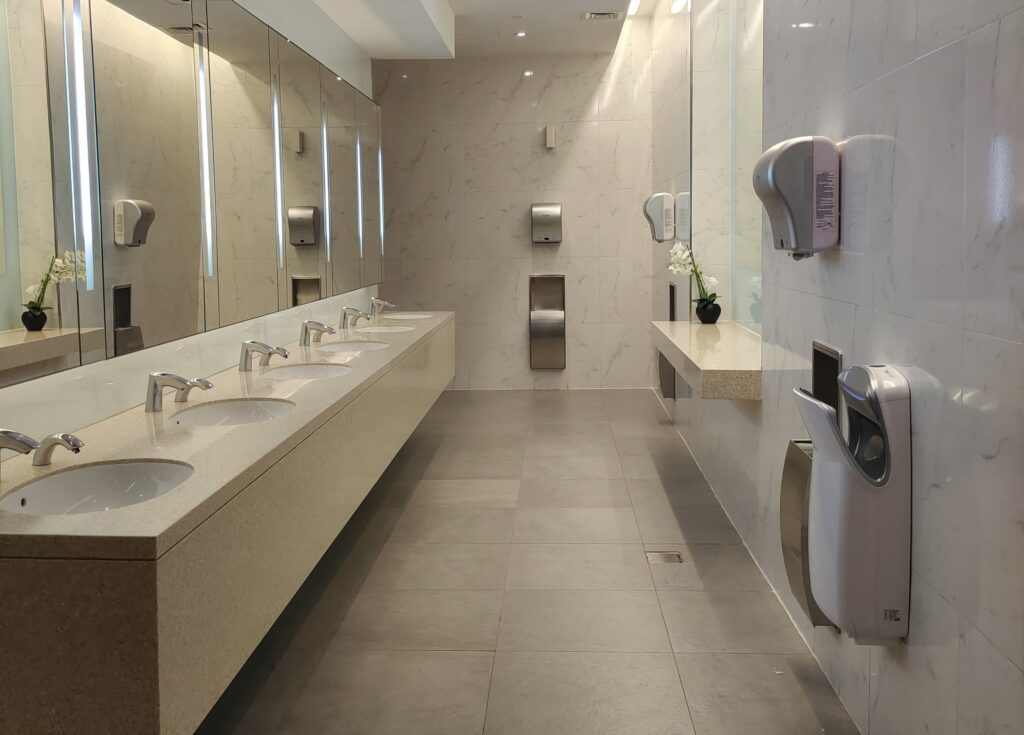
Washroom hygiene plays a critical role in shaping how people perceive your business, yet it’s often misunderstood. From the way a space smells to the equipment installed, assumptions are frequently made about what “washroom hygiene” really means.
In reality, effective washroom hygiene goes far beyond appearances. It relies on consistent maintenance, proper practices, and informed decision-making.
With so much conflicting information available, it’s easy for common myths to take hold. These misconceptions can lead to gaps in hygiene standards and missed opportunities to create a safer, more professional environment for your customers, staff and visitors.
Below, the team at South West Hygiene has separated the fact from fiction to help you make smarter decisions for your washroom facilities.
TL;DR
Washroom hygiene isn’t about how it looks or smells, it’s about consistent, effective practices. Many common beliefs (like “fresh smell = clean” or “hand dryers spread germs”) are misleading.
In reality:
- Germs live on high-touch surfaces and invisible contamination is common
- Proper handwashing (with soap, for 20 seconds) matters more than products or water temperature
- Both hand dryers and paper towels can be hygienic when used correctly
- Cleanliness requires ongoing maintenance not just one-off cleaning
Bottom line: Good washroom hygiene is built on consistency, correct behaviour, and well-maintained facilities, not assumptions.
Myth 1: A fresh-smelling washroom is clean
Fact: Scent alone is not a reliable indicator of cleanliness. A structured maintenance programme combining regular cleaning, air care, and bacterial treatments is essential. Our Oxy Gen units use a proprietary neutralising agent, Neutra-Lox™, that ensures that any bad odours are not just masked but locked in and eliminated.
Myth 2: Viruses can’t survive on hard surfaces
Fact: Many viruses can remain active on hard surfaces such as door handles and taps for several hours. Regular cleaning and good hand hygiene are key to reducing transmission.
Myth 3: Hand dryers spread germs
Fact: When used correctly, modern hand dryers are an effective way to maintain hygiene.
Wet hands spread bacteria more easily, so efficient drying is crucial.
Myth 4: Hand dryers are inefficient
Fact: Today’s hand dryers are designed to be energy-efficient and reduce reliance on paper towels, helping to lower waste and operational costs.
Myth 5: Everyone knows how to wash their hands properly
Fact: Research shows that most people do not wash their hands for long enough to remove germs effectively. Providing clear guidance and well-stocked soap dispensers encourages better hygiene practices.
Myth 6: Hand dryers are slow
Fact: Modern high-speed hand dryers can dry hands in as little as 10–15 seconds, making them both practical and efficient.
Myth 7: Toilet seats are the dirtiest surface
Fact: High-touch areas such as door handles, flush buttons, and taps often harbour more bacteria due to frequent contact and inconsistent cleaning.
Myth 8: Hot water kills more germs than cold water
Fact: Water temperature has minimal impact on germ removal. Thorough washing with soap for at least 20 seconds is what matters most.
Myth 9: If hands look clean, they are clean
Fact: Germs are invisible. Hands that appear clean can still carry harmful bacteria and viruses. Regular handwashing is essential.
Myth 10: Antibacterial soap is always better
Fact: For everyday use, regular soap is just as effective when used correctly. Technique matters more than product type.
Myth 11: Paper towels are always more hygienic than hand dryers
Fact: Both paper towels and hand dryers are hygienic when used properly. The most important factor is ensuring hands are completely dry.
Myth 12: Gloves eliminate the need for handwashing
Fact: Gloves can become contaminated and spread germs if not used correctly.Hand hygiene remains essential before and after use.
Myth 13: Hand sanitiser can replace handwashing
Fact: Sanitiser is a useful alternative when soap and water aren’t available, but it does not remove all contaminants. Handwashing with soap should always be the first choice where possible.
Myth 14: Once cleaned, a washroom stays clean
Fact: In high-traffic environments, contamination begins almost immediately. Frequent checks and stock replenishment are necessary throughout the day.
Myth 15: Hygiene is only the cleaner’s responsibility
Fact: Maintaining washroom hygiene is a shared responsibility between staff, visitors, and management. Make it easy for everyone to keep your washrooms hygienic.
Myth 16: Handwashing is only important after using the toilet
Fact: Hand hygiene is important throughout the day, after coughing, sneezing, touching shared surfaces, and before eating.
Myth 17: Eco-friendly products are less effective
Fact: Modern sustainable products are designed to meet high hygiene standards while reducing environmental impact.
Myth 18: Touching your face is harmless
Fact: Hands can transfer germs to the eyes, nose, and mouth even if they appear clean.
This is a common route for infection.
Myth 19: More soap means cleaner hands
Fact: Excess soap does not improve effectiveness and may cause waste or skin irritation.
Proper coverage and hand washing technique is what matters.
Myth 20: Hygiene only matters during outbreaks
Fact: Consistent hygiene practices are essential year-round not just during periods of increased illness.
Final Thoughts
Effective washroom hygiene is about consistency, not perception. By understanding the facts and addressing common misconceptions, businesses can create safer, more hygienic environments for everyone.
Now we’ve busted some of the myths, why not talk to the South West Hygiene team about how best to improve hygiene in your washrooms. Call us on 0800 0184 060 or email customercare@southwesthygiene.co.uk.
You can keep up to date with everything South West Hygiene by following us on social media on Facebook, Instagram and LinkedIn.


